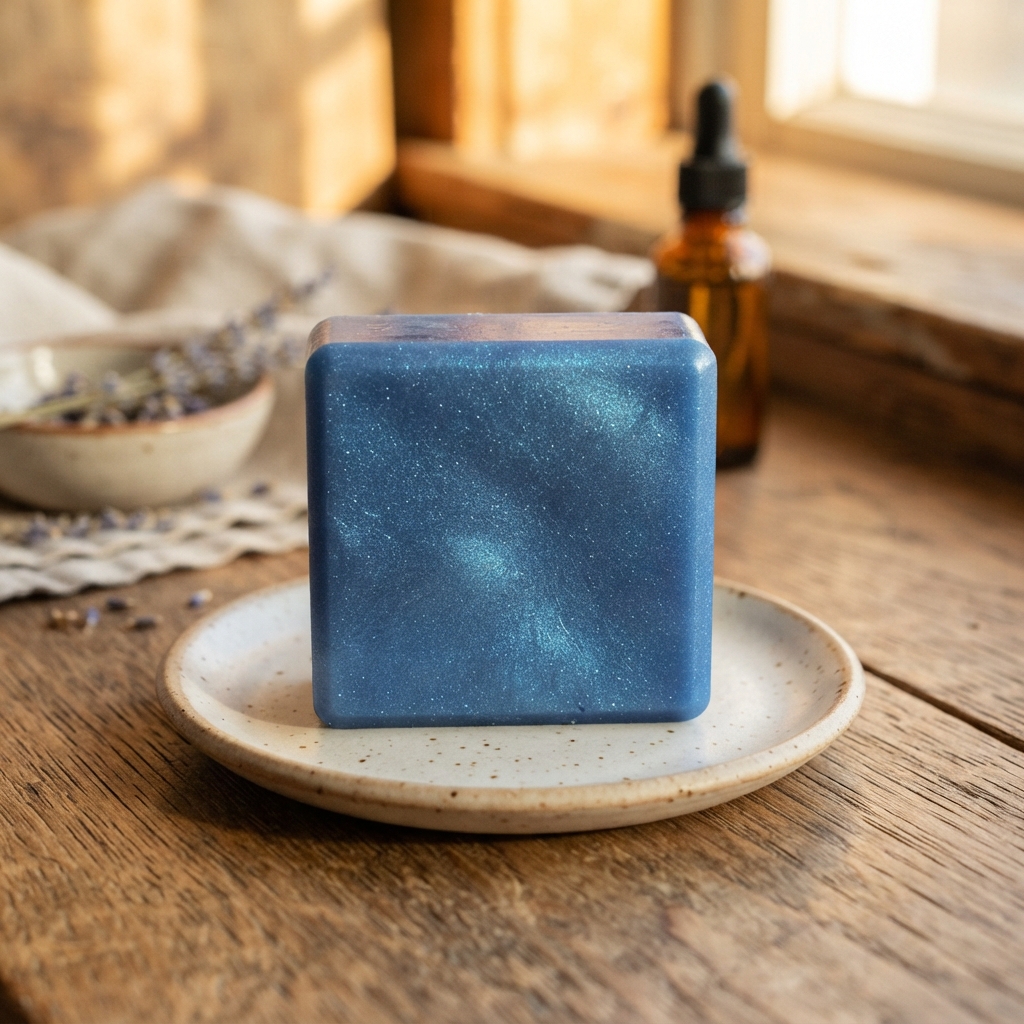
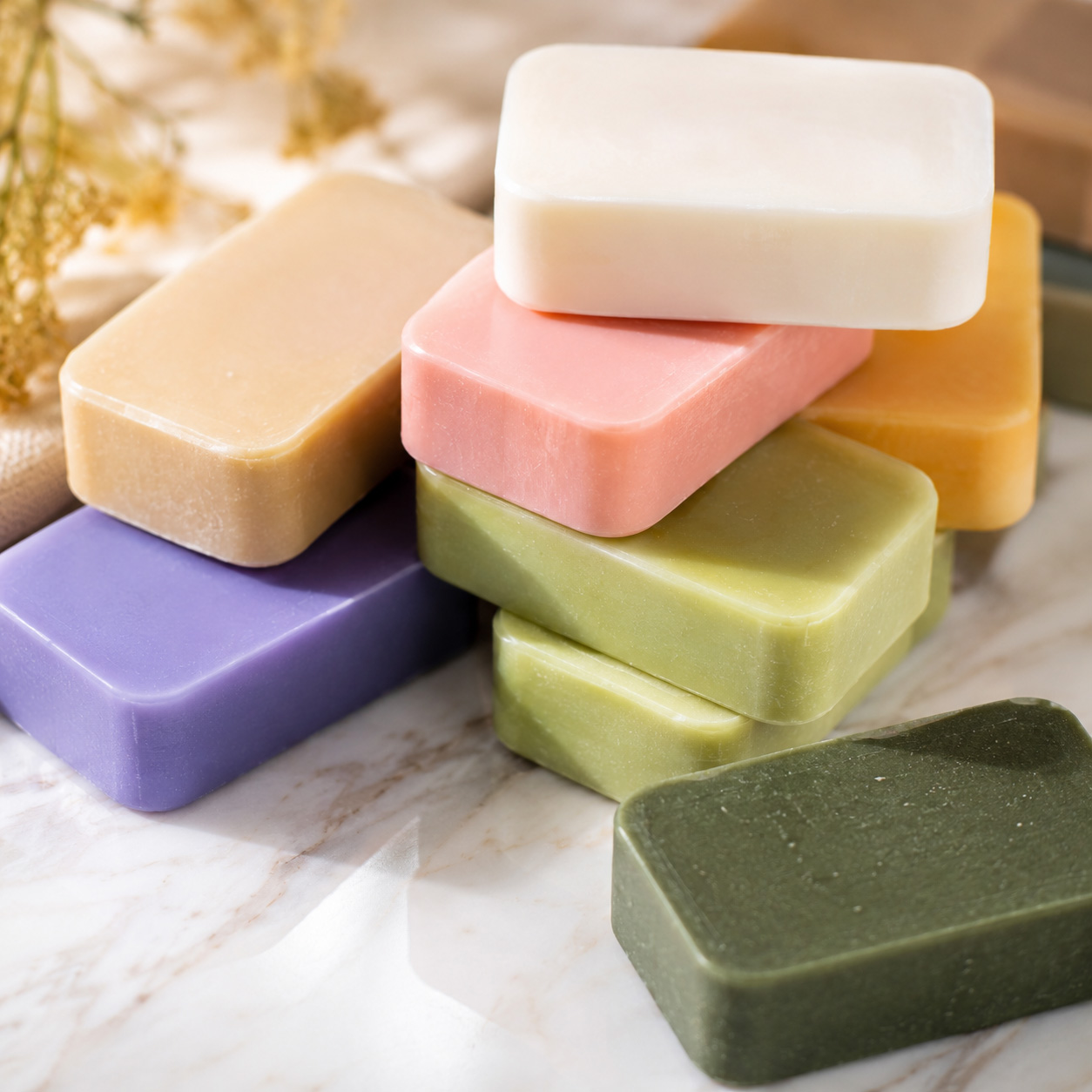
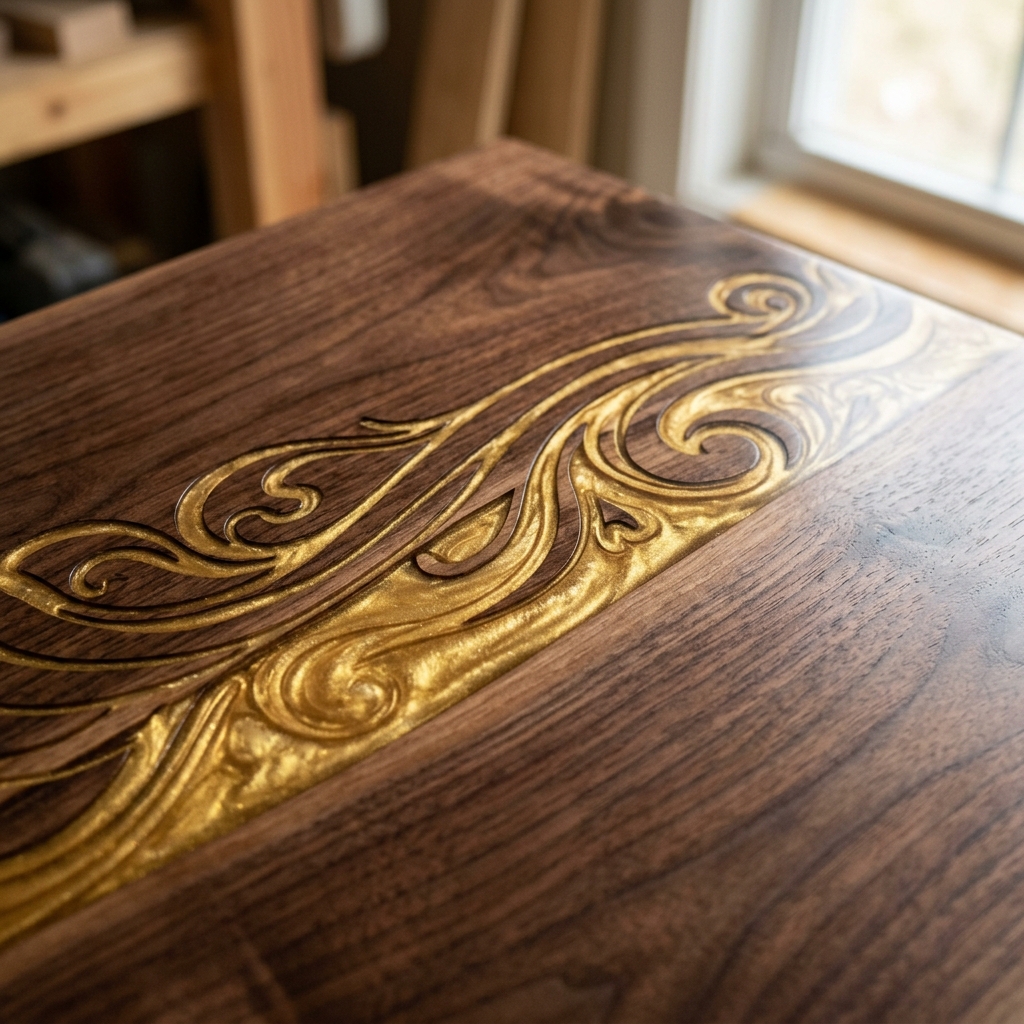
Mica powder is a widely used colorant in melt and pour soap making. Its fine mineral particles reflect light, giving soap a pearlescent, metallic, or softly sparkling finish. The way mica is dispersed, the type of soap base, and the amount of pigment all influence the final appearance.
What Is Mica Powder?
Mica is a cosmetic-grade mineral powder with natural reflective properties. Unlike liquid dyes, which create transparent color, mica produces a pearlescent effect by reflecting light from its fine particles. Depending on the color and soap base, mica can range from subtle pearl tones to bold metallic finishes.
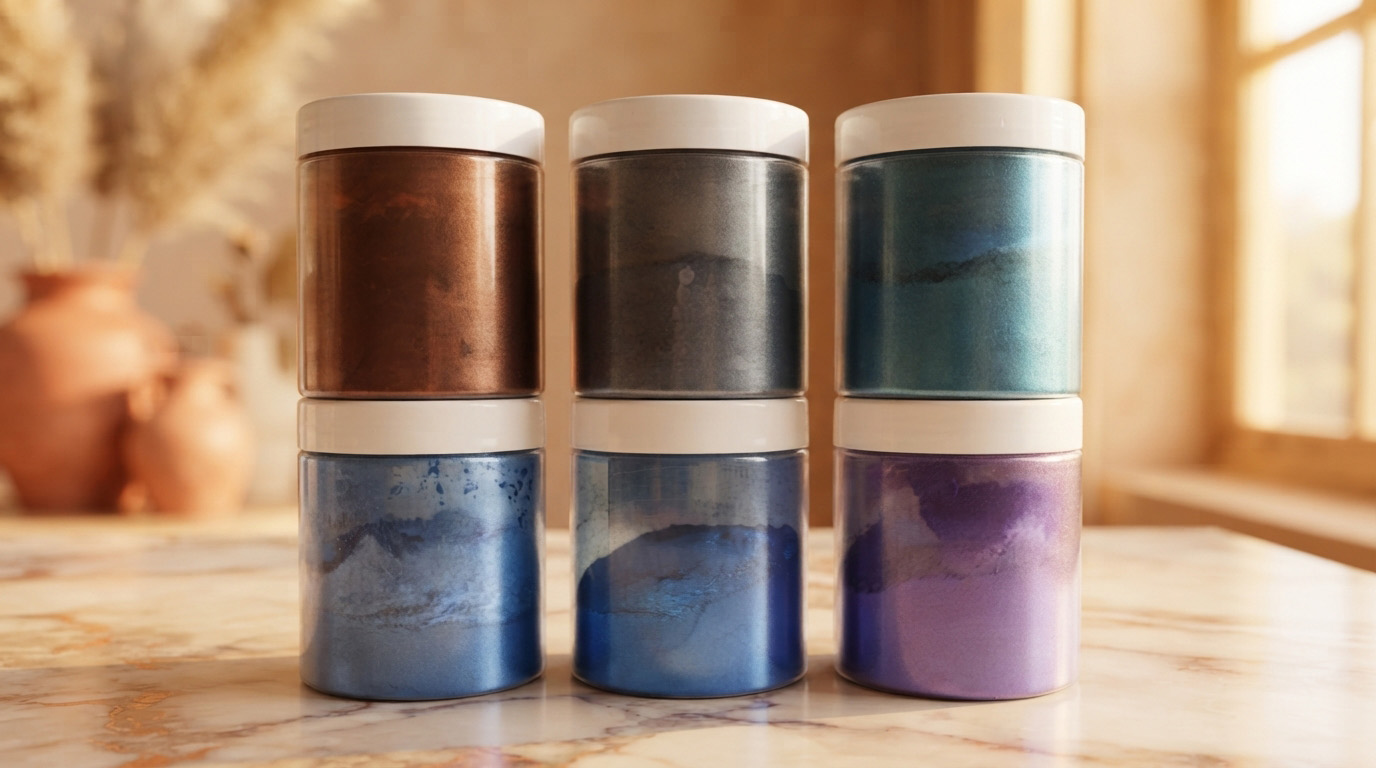
Choosing the Right Soap Base
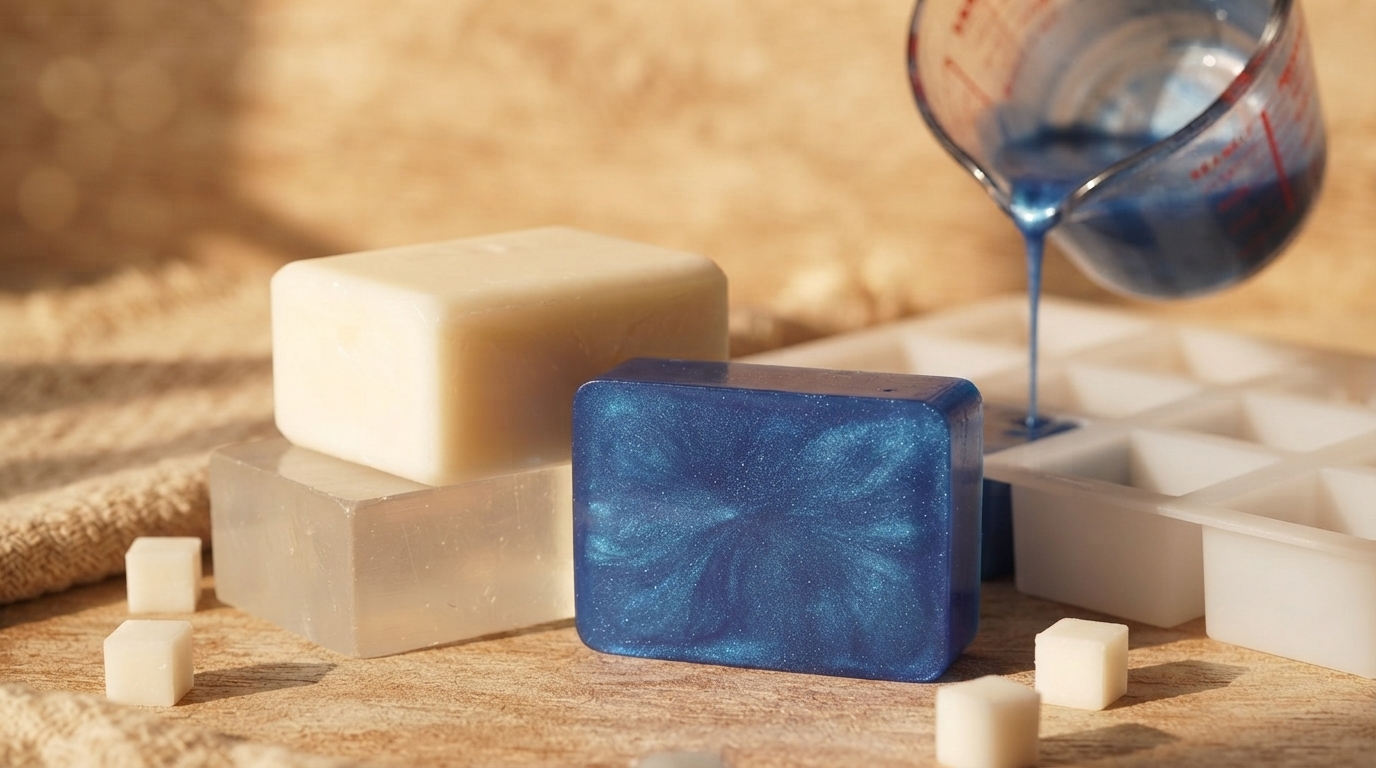
The soap base affects how mica appears. A clear melt and pour base allows light to pass through, producing brighter colors and stronger shimmer. Mica in a clear base often appears deeper and more vibrant, making it suitable for jewel tones and decorative designs. A white or opaque base softens the color, resulting in a creamy or pastel tone with a smooth pearl-like finish. The choice between clear and white depends on the visual effect you want.
How to Mix Mica for Melt and Pour Soap
Adding dry mica powder directly to melted soap can cause clumping or uneven color spots. A better approach is to disperse mica before adding it to the soap base. Mix the mica with a small amount of glycerin or rubbing alcohol until it forms a smooth paste. This separates the pigment particles and helps distribute color evenly. After the soap base is fully melted, stir in the dispersed mica gently. Avoid vigorous mixing, which can introduce air bubbles.
Creating Different Effects with Mica Powder
Layered designs are made by pouring separate soap layers with different mica colors to create stripes or gradients. Marble and swirl effects result from combining two or more mica colors and stirring lightly before the soap sets. Dry mica can also be brushed onto the surface of finished bars to add a strong shimmer for display, though this surface effect may fade with use.
Common Mistakes When Using Mica in Soap
Using too much mica can affect soap texture and slightly reduce lather because mica is an insoluble pigment. Overheating the soap base can also change color appearance and lower soap quality. Proper dispersion and controlled mixing help avoid these problems.
Tips for Better Mica Color Results
For transparent, vibrant effects, use mica with a clear soap base. For softer or pastel designs, combine mica with a white soap base. Pearl, metallic, and color-shifting mica powders can add depth and dimension under different lighting conditions, but they still depend on the base and mixing technique.
Conclusion
Mica powder offers a straightforward way to add color, shimmer, and visual depth to melt and pour soap. Clear bases produce brighter, more reflective results, while white bases create softer, pastel finishes. Preparing mica as a smooth paste before adding it to melted soap, using moderate temperatures, and controlling the amount of pigment lead to consistent, well-finished bars.