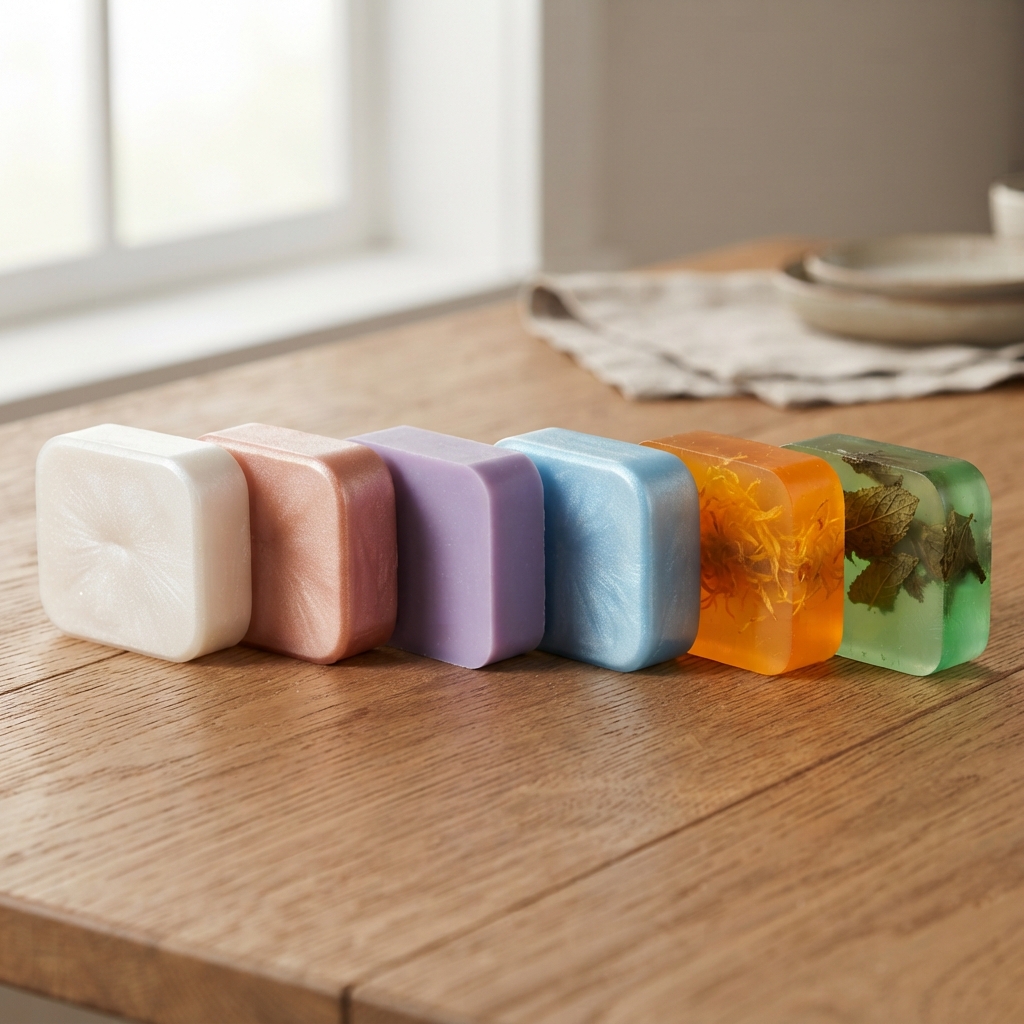
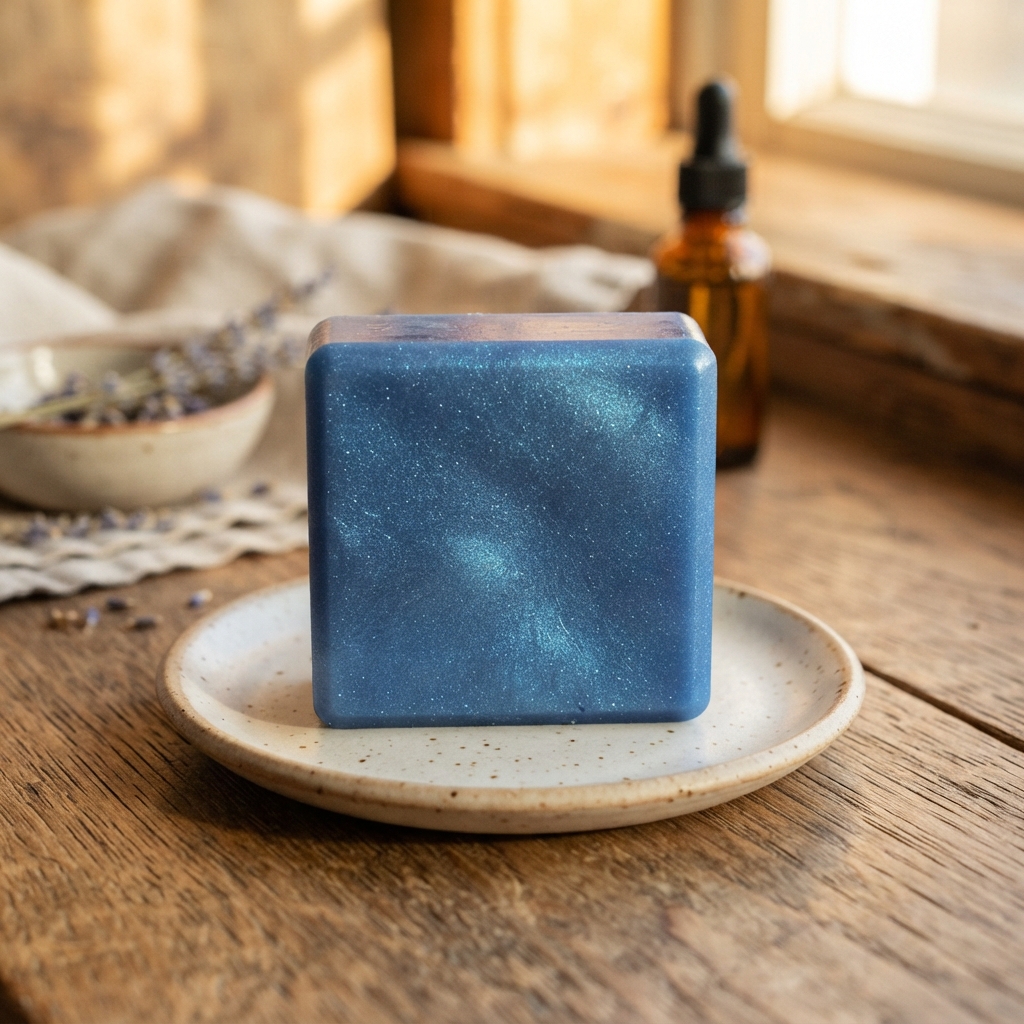
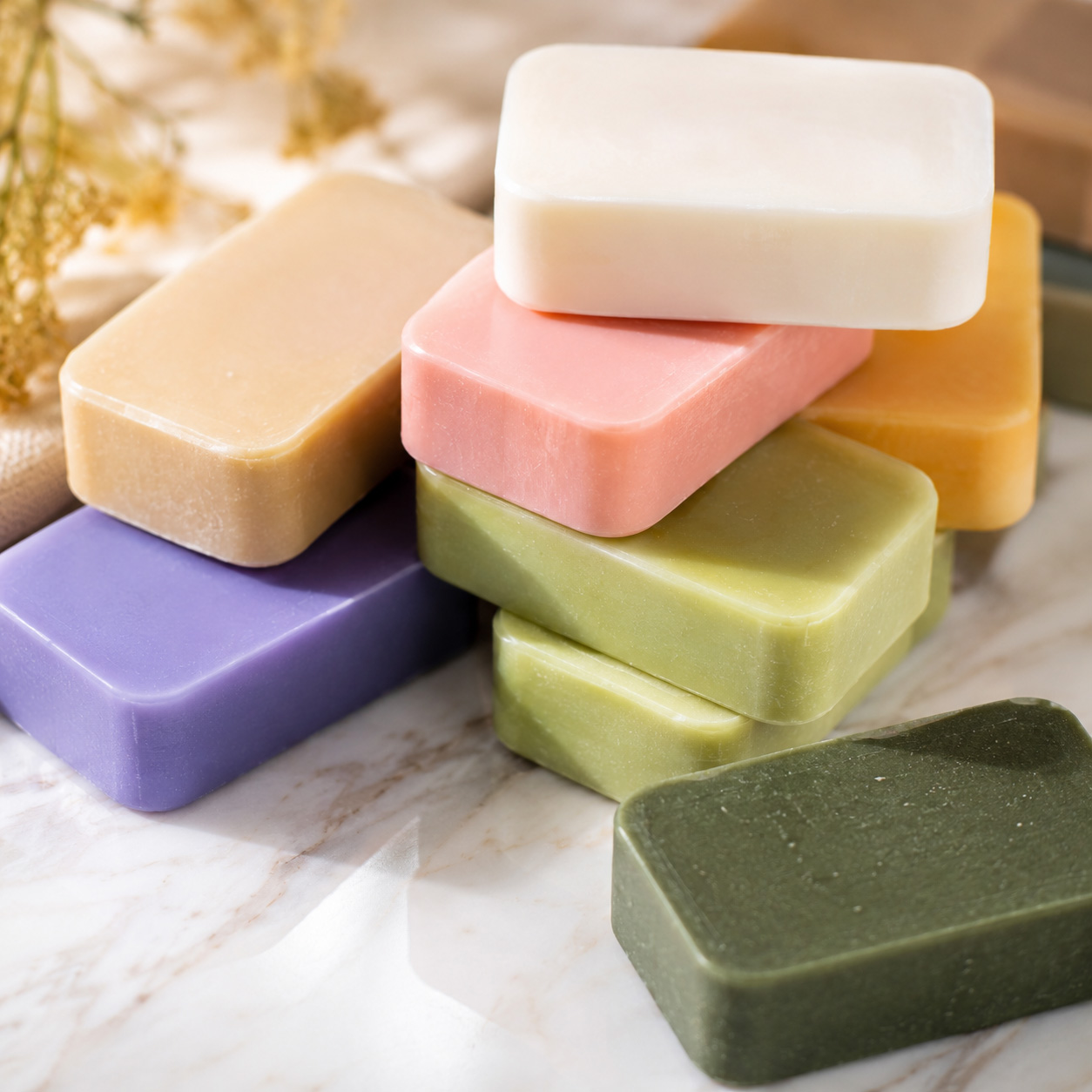
Let’s talk about the fun part of melt and pour soap making: adding color! It’s amazing how the right colorant can turn a plain soap base into something vibrant, elegant, or naturally beautiful. For melt and pour, most soap makers reach for mica powders, liquid soap colorants, or soap-specific color blocks and gels. Each one gives a different look, so your choice really depends on your soap base and the vibe you’re going for. Fair warning: skip the food coloring and candle dyes. Food coloring tends to bleed and fade, and candle dyes are made for wax, not skin-friendly cosmetics.
Three Common Colorants for Melt and Pour Soap
Mica Powder
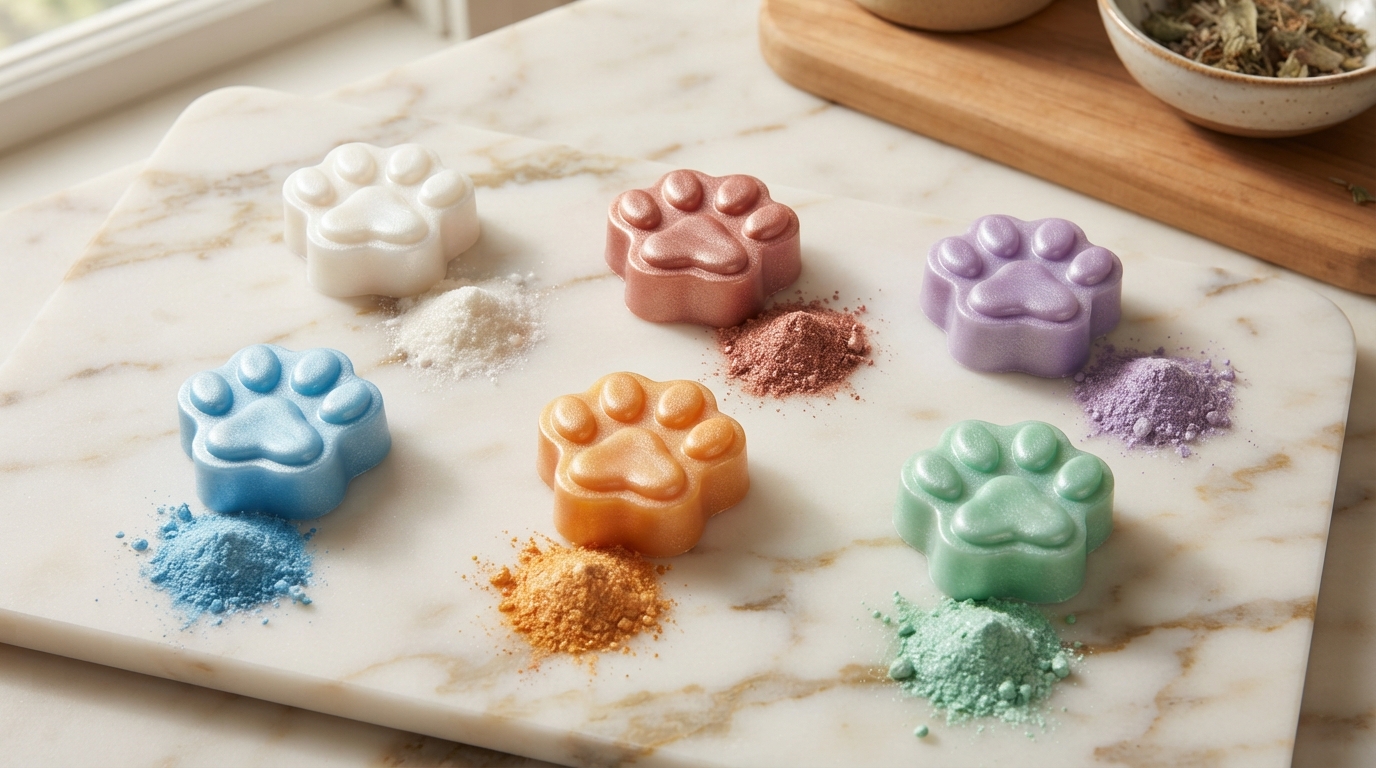
Mica powder is a mineral-based pigment that’s a total favorite in handmade soap and cosmetics. It’s the go-to for shimmer, pearlescent glows, and even metallic finishes. In a clear glycerin soap base, mica looks like sparkling jewels because light shines right through. In a white base, the same mica turns soft and pastel or pearlescent. Since mica is a powder, don’t just toss it into the melted soap. Mix it with a tiny bit of glycerin or rubbing alcohol first to avoid clumps and get an even color. And always, always use cosmetic-grade mica made for bath and body products.
Liquid Soap Colorant
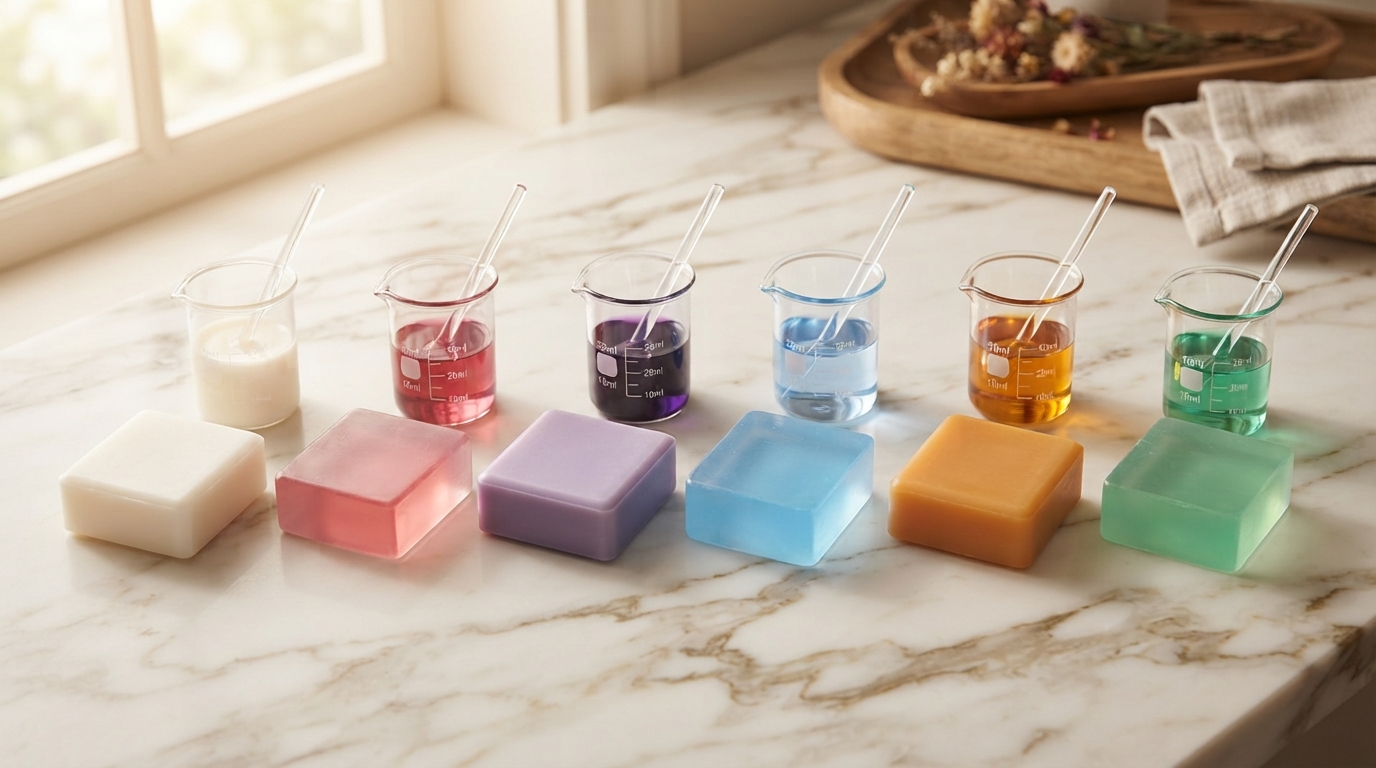
If you’re new to soap making, liquid soap colorant is your best friend. It’s already pre-dispersed, so it blends into melted soap like a dream. Start with a few drops for a light tint, and add more until you get that rich, vibrant shade you’re after. Liquid dyes give you clean, uniform color without changing the soap’s texture, and they work beautifully in both clear and white bases. Because you can tweak the color so easily, they’re perfect for beginners who want to play around with different designs.
Color Blocks and Gel Colorants
Need a bold, opaque color that really pops? Soap color blocks and gel colorants are your answer. These concentrated colorants are made just for soap making, and they work especially well in white or opaque bases. Think bright seasonal soaps, layered designs, or any time you want strong color separation. Just make sure you’re buying ones formulated for soap, not generic craft dyes.
Colorants You Should Avoid in Soap Making
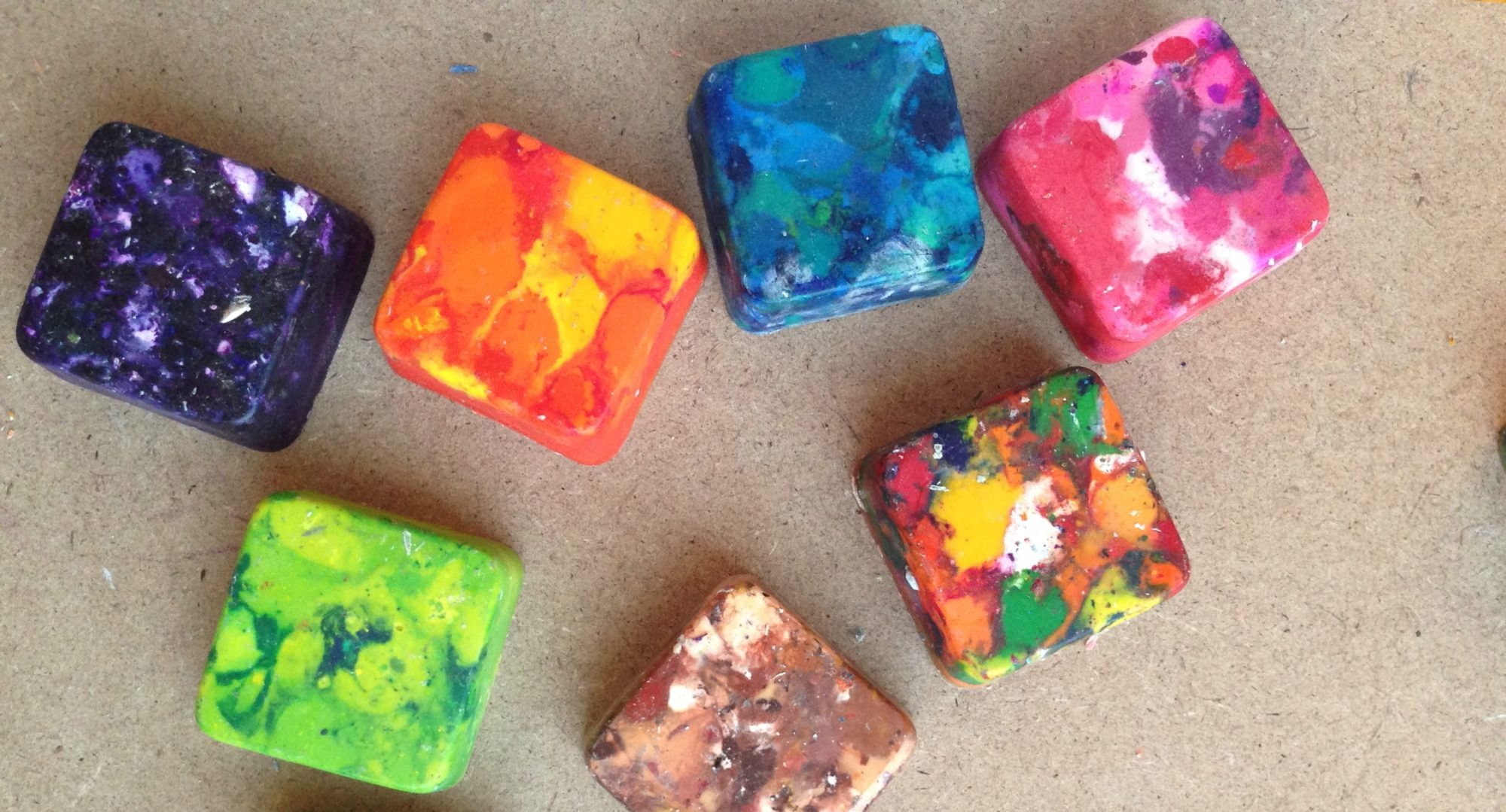
Let’s be real, not all colorants are soap-friendly. Some might look pretty but can ruin your finished bars or even irritate skin. Food coloring is a big no because it bleeds between layers and fades fast. Candle dyes are made for wax, not skin, so skip those too. And please, don’t reach for crayons or acrylic paints—they’ve got binders and pigments that just won’t mix into soap properly. Stick with soap-safe options and you’ll be golden.
How to Choose the Right Colorant for Different Soap Bases
Your soap base matters a lot when it comes to color. Clear glycerin bases let light through, so they’re perfect for transparent colors, jewel tones, and shimmery mica effects. White bases give you an opaque backdrop—liquid dyes produce bright, solid colors, while mica turns soft and pastel. If you’re using a naturally tinted base like honey or charcoal, keep in mind it’ll shift your final shade a bit because that base color is already in the mix. Knowing how your base interacts with your colorant helps you get the exact look you’re aiming for.
Tips for Creating Beautiful Colored Soap
Here’s a friendly tip: always add color a little at a time. Concentrated colorants are sneaky strong, so start with less than you think and build up. Want custom shades? Mix different colors together. And don’t be afraid to try layering, swirling, or embedding for fancier designs. Just remember, the final look depends on your soap base, how much colorant you use, and even the lighting where you display your soap.
FAQ
Can you use food coloring in melt and pour soap?
It’s not recommended. Food coloring may bleed between layers and often doesn’t hold a stable color in soap. Soap-specific colorants like mica, liquid soap dye, and soap color blocks give you much better results.
How much liquid soap dye should I use?
It really depends on the dye’s concentration and how intense you want the color. Start with a small amount and gradually add more until you hit the shade you love.
Why did my soap color fade?
Fading can happen if you use the wrong kind of colorant or if your finished soap sits in strong sunlight for a long time. Cosmetic-grade mica and soap-specific liquid colorants are designed to hold their color much better.
What colorant works best for clear soap bases?
Clear glycerin bases love mica powders and transparent liquid soap dyes because they let colors and shimmer effects show through beautifully.
Is mica powder safe for soap?
Cosmetic-grade mica made for bath and body products is totally fine for soap making. Just make sure the mica you buy is specifically labeled for cosmetic use.
Final Thoughts
Coloring melt and pour soap is such a fun way to make your handmade creations truly yours. Whether you’re into shimmer from mica, vibrant liquid dyes, or bold blocks, picking the right colorant changes everything. If you’re just starting out, go with liquid soap colorants—they’re forgiving, easy to mix, and give consistent results. As you get more comfortable, feel free to experiment and let your creativity run wild. Happy soaping!