Oil-soluble colorants usually work better with candle wax than water-based dyes, but suitability still depends on clear documentation for candle use.
A candle dye is a colorant made to blend into candle wax instead of separating from it. Here, “works in wax” means the colorant spreads predictably through the wax when used according to the supplier’s candle-use directions. Oil solubility suggests compatibility, but it does not prove that an unrelated colorant is made for a wicked candle. This comparison shows how both dye types behave, what product details to check, and when to recommend, verify, or avoid a colorant.
Is Oil-Soluble Dye Better Than Water-Soluble Dye for Candles?
Oil-soluble dye usually works better than water-based dye in candle wax, but candle-use formulation still needs verification.
Here, “better” means more likely to dissolve or spread through the wax phase. It does not mean universally safer, higher quality, or suitable for every candle. A candle dye is made to blend into candle wax, and it works when it stays evenly incorporated under the manufacturer’s candle-use directions.
| Product or Formulation Type |
Expected Behavior in Wax |
Candle-Use Evidence |
Decision |
| Documented oil- or wax-compatible candle dyes |
Should disperse uniformly; designed for wax systems |
Established candle-use record |
Controlled testing recommended |
| Water-based process colorants |
May bead or separate in ordinary candle wax |
Not intended for typical wax systems |
Avoid for ordinary candle wax |
| Oil-soluble products with unconfirmed candle use |
Behavior unconfirmed in wax |
No documented candle-use evidence |
Validate first, then test |
| Liquid products with unknown carrier |
Cannot be predicted from physical form alone |
Carrier identity unknown |
Requires validation |
Oil solubility describes how a colorant behaves in an oil-like or wax-like phase. It suggests compatibility, but a colorant made for another use should not be assumed suitable for candles.
Uniform incorporation means the color remains evenly distributed after stirring stops and the wax cools. A mixture may look even while being stirred, then develop droplets, streaks, residue, or renewed separation. “Liquid dye” describes physical form only; it does not show whether the carrier is water-based, oil-compatible, or intended for candle wax.
Choose oil- or wax-compatible dye only when its candle application and product instructions are documented.
Why Are Water-Based Dyes Usually Incompatible With Candle Wax?
Water-based dyes usually fail in candle wax because the carrier separates from the wax instead of blending into it evenly.
Ordinary candle wax repels water, so a water-based carrier can form beads, droplets, streaks, a temporary suspension, uneven cooled color, or persistent separation. Stirring may break the liquid into smaller droplets and briefly make the mixture look evenly colored, but it does not fix the underlying incompatibility.
The term water-soluble can refer to the dye molecule, the carrier, or the complete commercial formulation. This comparison covers colorants with a water-based carrier; it does not assume that every manufactured dye described as water-soluble uses the same formulation.
Ordinary water-based food coloring is generally unsuitable for candle wax because its carrier does not form a stable wax phase. Oil-soluble food coloring still needs product-specific verification for candle use.
Check what happens after stirring stops. A compatible candle dye remains incorporated in the wax, while a water-based product may regroup into visible droplets or uneven areas. Beads and droplets suggest carrier separation, but dry specks or bottom sediment can come from incomplete dissolution or settling and need a different diagnosis.
How can I prevent water droplets or streaks when coloring candle wax?
Use a documented candle dye made for wax instead of trying to force a water-based craft colorant into the wax phase. This selection rule does not replace a separate diagnosis or recovery process for a batch that already shows problems.
The next step is to separate a solubility claim from proof that the product is suitable for candle use.
What Is the Difference Between Dye Solubility and Candle Suitability?
Solubility shows where a dye or carrier can dissolve, wax compatibility describes how it incorporates into candle wax, and candle suitability requires intended-use documentation plus evaluation in the chosen candle system.
Oil or wax solubility supports compatibility, but it does not prove that the product was made for candles. Clear candle-use documentation and controlled observation are separate forms of evidence.
| Evidence |
What It Establishes |
What It Does Not Establish |
Oil- or wax-soluble claim
(label / marketing statement) |
The product is intended to dissolve in oil- or wax-based carriers. |
That it performs acceptably in a specific wax, at a specific use level, or in a finished candle. |
Explicit candle or wax-melt use
(documented history of use) |
The product has actually been used in candle or wax-melt applications. |
That it is compatible with every wax type, fragrance load, or formulation. |
Technical documentation
(spec sheet, SDS, technical data) |
Composition, solubility, recommended use levels and handling guidance from the manufacturer. |
Real-world burning performance or long-term stability in a finished candle. |
Controlled wax observation
(small-scale compatibility test) |
How the product behaves visually in a defined wax system under set conditions
(dispersion, separation, bleed). |
Performance at production scale or under all pouring / cooling conditions. |
Finished-candle evaluation
(full burn / storage test) |
Actual end-use performance: appearance, burn behavior, scent throw and stability in the real product. |
That results will transfer unchanged to a different wax, wick, vessel or climate. |
This standard prevents a chemical or marketing description from becoming an automatic approval. A product may color melted wax but still be unsuitable for a finished candle because temporary color, uniform incorporation, and documented candle use are different results.
How Do You Verify a Candle Dye Before Buying It?
Do not choose a colorant based only on the words “oil-soluble,” “liquid,” or “candle dye”; verify its intended use, instructions, documentation, and any missing formulation details.
A verified candle dye has enough product-specific evidence to support a controlled wax test. This does not mean universal approval, and a reseller title or product-category label is not enough evidence on its own.
Verify these five product fields before testing:
- Manufacturer identity.
- Explicit candle or wax-melt application.
- Usage instructions and application restrictions.
- Availability of technical documents.
- Any unresolved, reseller-only, outdated, or conflicting evidence.
Keep a product in the verify category when a material field is missing, vague, reseller-only, outdated, or contradictory. Manufacturer documentation carries more weight than unsupported marketplace wording, but it still does not guarantee performance in every wax.
Why Is the Colorant Beading or Streaking in Candle Wax?
Beading, persistent droplets, streaking, or renewed separation may show that a candle colorant is failing to incorporate into the wax phase.
Dye–wax incompatibility means the colorant does not remain uniformly incorporated in candle wax. These visible signs are useful clues, not conclusive chemical proof, because undissolved dye and unrelated wax defects can produce different-looking failures.
Liquid beads or droplets may indicate carrier separation, while dry specks may indicate incomplete dissolution. Bottom sediment can result from separation, settling, or incomplete dissolution, so it does not point to one cause by itself.
Should I keep stirring when the colorant beads or separates?
No. More stirring cannot replace documented wax compatibility. Repeated agitation may hide separation while the wax moves, but it does not show that the colorant will remain incorporated after pouring and cooling.
Does Liquid Dye Reveal Whether Its Carrier Is Water-Based or Wax-Compatible?
“Liquid dye” describes the product’s physical form; it does not identify its carrier, wax compatibility, or intended candle application.
Physical form does not reveal carrier chemistry. Two liquid colorants can behave differently because they may use different carriers, serve different material systems, or be formulated specifically for candle wax.
Four separate fields determine the product classification:
- Physical form: Liquid, chip, block, flake, or powder.
- Carrier or solubility system: Water-based, oil-compatible, wax-compatible, solvent-based, or undisclosed.
- Intended application: Candles, wax melts, or another material system.
- Observed wax result: Pass, observe, fail, or not tested.
Choose candle dye by documented wax compatibility and intended application, not by whether the product is liquid or solid.
How Do You Decide Whether a Candle Dye Should Be Recommended, Verified, or Avoided?
Recommend a dye for controlled candle-wax testing only when its intended candle application and supporting product evidence are clear; verify products with material unknowns, and avoid products whose disclosed carrier or application conflicts with candle-wax use.
Product decisions, test results, and missing evidence are separate classification fields:
- Product decision: Recommend means the evidence supports controlled testing, verify means a material field remains unresolved, and avoid means the disclosed carrier or application conflicts with candle-wax use.
- Test result: Pass, observe, fail, or not tested records what happened under the documented wax and test conditions.
- Evidence state: Unknown means a required product or formulation field was not disclosed or could not be confirmed.
Recommend does not guarantee identical results in every wax. Verify does not mean the product is unsuitable. Avoid does not prove universal toxicity; it means the available evidence conflicts with this candle-wax purpose.
Candle-Dye Compatibility Decision Matrix
The matrix turns candle-use evidence and recorded wax behavior into a recommend, verify, or avoid decision.
| Product Evidence Pattern |
Format |
Carrier or Solubility Evidence |
Candle Application |
Documentation |
Wax Result |
Decision |
Next Action |
| Documented candle dye |
Any |
Wax-compatible or candle-formulated |
Yes |
Available |
Pass |
Recommend |
Continue evaluation in the intended candle system |
| Documented candle dye not yet tested |
Any |
Wax-compatible or candle-formulated |
Yes |
Available |
Not tested |
Recommend |
Run a controlled wax test |
| Oil-soluble product with clear candle use |
Any |
Oil- or wax-soluble |
Yes |
Available |
Pass or not tested |
Recommend |
Test or continue recorded evaluation |
| Oil-soluble product with an ambiguous result |
Any |
Oil- or wax-soluble |
Yes |
Available |
Observe |
Verify |
Diagnose the observation before proceeding |
| Oil-soluble product with unclear application |
Any |
Oil-soluble |
Unknown or reseller-only |
Missing or incomplete |
Not tested |
Verify |
Request manufacturer or supplier confirmation |
| Liquid product with unknown carrier |
Liquid |
Unknown |
Unclear |
Missing |
Not tested |
Verify |
Confirm carrier and intended application |
| Water-based non-candle colorant |
Liquid or gel |
Water-based |
No |
Category-specific |
Fail or not tested |
Avoid |
Select a documented candle dye instead |
| Candle-labeled dye showing particles |
Any |
Candle-formulated |
Yes |
Available |
Observe or fail |
Verify |
Diagnose dissolution, settling, or another recorded symptom |
| Product intended for another material system |
Any |
Category-dependent |
No |
Available for another use |
Not tested |
Avoid |
Do not infer candle suitability from solubility alone |
| Conflicting manufacturer and reseller information |
Any |
Conflicting or unknown |
Conflicting |
Inconsistent |
Not tested |
Verify |
Give current manufacturer evidence greater weight |
Manufacturer evidence carries more weight than unsupported reseller wording, but an observed failure does not identify its cause automatically. Each decision applies only to the documented product, wax, and test conditions; it does not certify legal compliance, universal safety, or finished-candle performance.
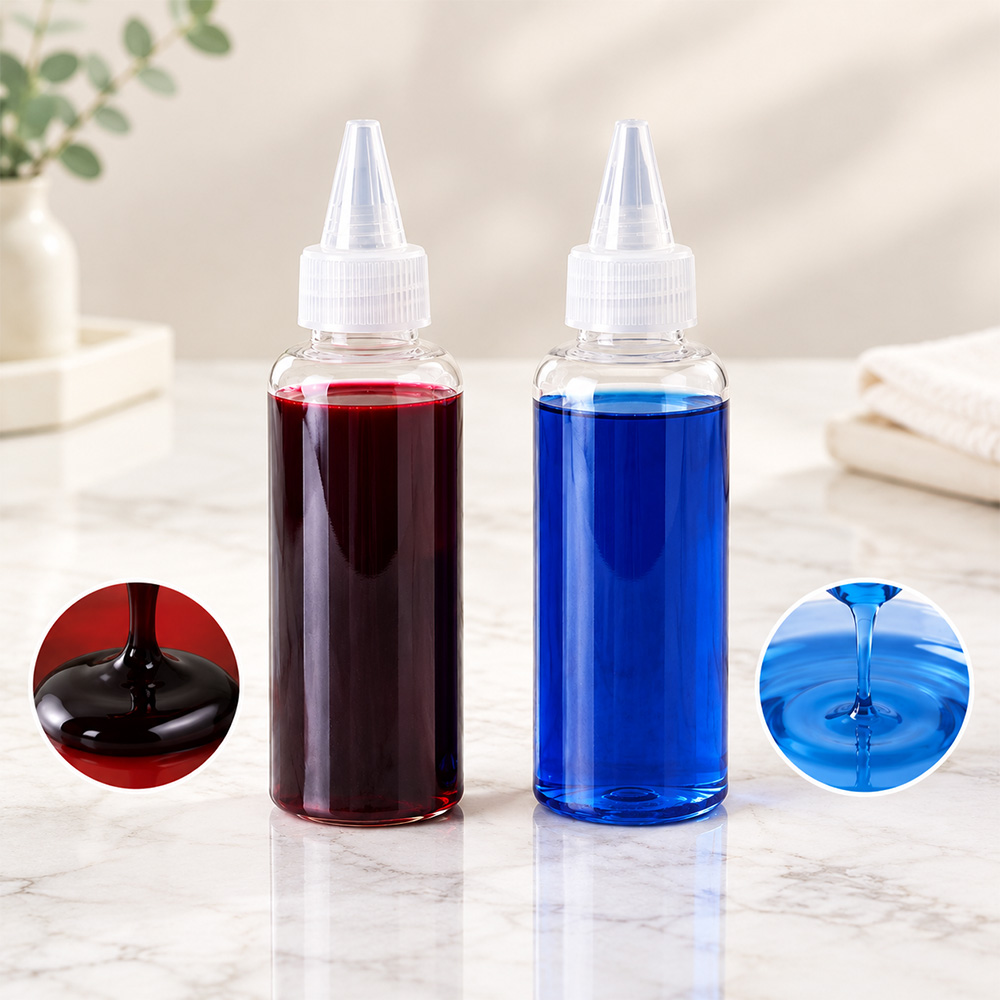 Water-Soluble vs Oil-Soluble Dyes for Candles: Which One Works in Wax?
 Fragrance Oil for Candles: Performance Evaluation Guide
 How Fragrance Oils Work in Candles?