Mica powder is a popular choice among artists who want to add shimmer, depth, and a unique reflective effect to acrylic paintings. With its natural pearlescent appearance and excellent light-reflecting properties, mica powder can transform ordinary acrylic paint into a stunning metallic or glowing finish.
Whether you are creating abstract artwork, acrylic pouring projects, decorative paintings, or mixed-media crafts, adding mica powder to acrylic paint allows you to explore new levels of color, texture, and visual effects.
In this guide, we will explain why artists use mica powder in acrylic paint, different mixing techniques, and practical tips to help beginners achieve the best results.
Why Use Mica Powder in Acrylic Paint?
Adding mica powder to acrylic paint can significantly enhance the appearance of your artwork. Unlike traditional pigments that mainly provide color, mica powder interacts with light to create a reflective, pearlescent effect.
The most noticeable benefit is the addition of shimmer and metallic brilliance. Depending on the type and amount of mica powder used, acrylic paint can achieve anything from a subtle pearl glow to a bold metallic surface. Gold, silver, bronze, blue, purple, and interference mica powders can all create different artistic effects.
Mica powder also helps create more depth and dimension. Because the particles reflect light at different angles, the painted surface can appear more dynamic and three-dimensional. This makes mica powder especially useful for abstract paintings, textured artwork, and acrylic pouring techniques.
Another advantage is versatility. Mica powder can be mixed directly with acrylic paint, applied as a highlight, or combined with acrylic mediums to create raised and textured effects. Artists can adjust the amount of mica powder to achieve either a transparent shimmer or a stronger metallic finish.
Different Ways to Use Mica Powder in Acrylic Paint
1. Mix Mica Powder Directly with Acrylic Paint
The simplest and most common method is mixing mica powder directly into acrylic paint. This technique creates an evenly distributed shimmer effect throughout the paint and works well for both beginners and experienced artists.
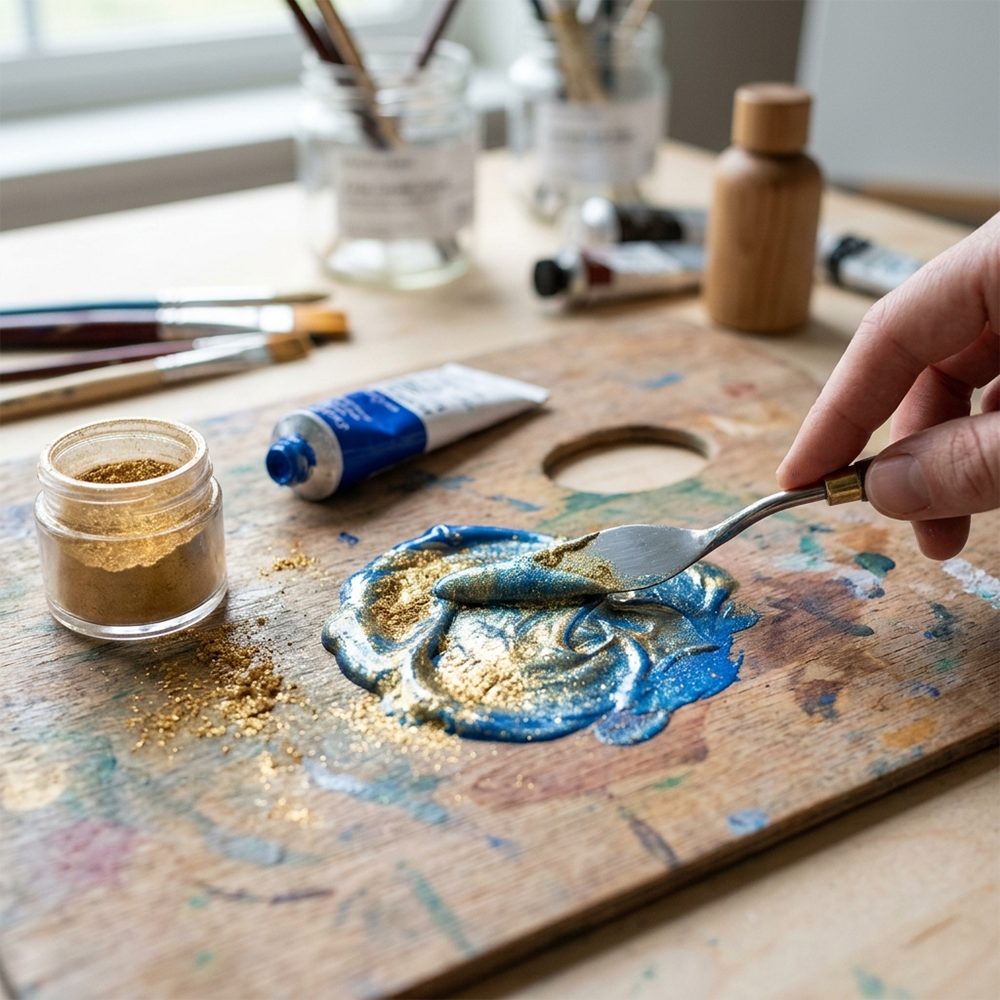
To start, place a small amount of acrylic paint on a palette or mixing surface. Add mica powder gradually and mix thoroughly until the powder is evenly dispersed. A good starting point is approximately 1/8 teaspoon of mica powder per tablespoon of acrylic paint, but the amount can be adjusted depending on the desired level of shimmer.
For a soft pearl effect, use less mica powder. For a stronger metallic appearance, increase the amount gradually while maintaining a smooth consistency.
2. Create Multi-Dimensional Layers
One of the best ways to highlight the reflective properties of mica powder is by layering different mica-infused acrylic paints.
Artists can apply a base color first and then add additional layers containing different mica shades. When light hits the different layers, the painting gains more depth and movement.
This technique works especially well for abstract artwork, ocean-inspired paintings, galaxy designs, and decorative wall art.
3. Highlight Specific Areas with Mica Powder
Mica powder does not always need to be mixed throughout the entire painting. It can also be used selectively to emphasize certain areas.
After applying the acrylic base coat, mica powder can be lightly brushed onto specific sections while the surface is still slightly wet. Another option is mixing mica powder with a small amount of acrylic gloss medium and applying it with a fine brush.
This method allows artists to create highlights, glowing details, and focal points without changing the overall appearance of the artwork.
4. Combine Mica Powder with Acrylic Medium
For artists who enjoy textured painting, mica powder can be combined with acrylic mediums such as gloss gel or modeling paste.
Mixing mica powder with acrylic medium creates a thicker, dimensional layer that adds both texture and shine. The mixture can be applied using a palette knife, creating raised areas with a beautiful pearlescent reflection.
This technique is ideal for mixed-media artwork, textured canvases, and decorative crafts.
5. Use Mica Powder for Acrylic Pouring
Acrylic pouring is another popular application for mica powder. When mixed with acrylic paint and pouring medium, mica particles create flowing metallic patterns and shimmering effects.
During the pouring process, the mica particles move with the paint and reflect light differently across the surface. This creates unique color shifts and natural-looking highlights that make every piece different.
For best results, experiment with different mica colors and observe how they interact with other pigments during the pouring process.
Step-by-Step Guide: How to Mix Mica Powder with Acrylic Paint
Step 1: Choose Your Mica Powder and Acrylic Paint
Start by selecting a suitable mica powder color based on your desired effect. Metallic shades such as gold and silver create luxurious finishes, while colored mica powders can produce vibrant artistic effects. Interference mica powders can create subtle color reflections when applied over darker backgrounds.
For better results, choose high-quality acrylic paint with good pigmentation and a smooth texture. Medium or heavy-body acrylic paints usually work well because they maintain their coverage after adding mica powder.
Step 2: Mix Mica Powder into Acrylic Paint
Add acrylic paint to your palette and slowly introduce mica powder. Avoid adding too much powder at once, as excessive mica can affect the paint consistency.
Use a mixing stick, spatula, or brush to blend the powder thoroughly until the mixture becomes smooth and uniform.
A small test mixture is recommended before applying it to your final artwork.
Step 3: Apply the Mica-Infused Acrylic Paint
Once the mixture is ready, apply it to your canvas using your preferred painting method.
Traditional brush techniques can create smooth metallic surfaces, while dry brushing can produce textured highlights. For more creative effects, layering multiple mica colors can create depth and contrast.
If you are using acrylic pouring techniques, combine the mica-infused paint with pouring medium and allow the colors to flow naturally across the canvas.
Step 4: Experiment with Different Effects
Mica powder offers endless creative possibilities. Try combining different mica colors to create gradients, color transitions, or unique reflective effects.
You can also experiment with different application methods, such as brushing, layering, stamping, or mixing mica powder with acrylic mediums. Small changes in the amount of mica powder or the background color can dramatically affect the final appearance.
Step 5: Protect Your Finished Artwork
After the acrylic paint has completely dried, applying a protective sealer can help preserve the finish and enhance the shimmer effect.
A gloss varnish can increase the reflective appearance of mica powder and create a brighter finish. If you prefer a softer look, a matte varnish can reduce the shine while maintaining the artistic texture.
Tips for Using Mica Powder in Acrylic Paint
When working with mica powder, it is best to start with a small amount and gradually increase it. Too much powder may change the paint texture and reduce its smooth application.
Always mix mica powder thoroughly to avoid uneven distribution or visible clumps. Testing your mixture on a small piece of canvas or paper before applying it to your final artwork can help you understand the final dry appearance.
When combining multiple mica colors, consider how the shades interact. Some combinations may become less vibrant when mixed together, so testing different ratios is recommended.
Create Stunning Acrylic Artwork with High-Quality Mica Powder
Using mica powder in acrylic paint is a simple way to add elegance, shimmer, and dimension to your artwork. From subtle pearl effects to bold metallic finishes, mica pigments give artists more creative freedom and allow ordinary acrylic paintings to become visually striking pieces.
For artists, craft makers, and manufacturers looking for reliable mica powder, high-quality pearlescent pigments are available in a wide range of colors and effects. Our mica powders are designed for applications including acrylic painting, resin art, handmade crafts, and decorative projects, helping creators achieve brilliant and long-lasting visual effects.