The DIY resin craft market offers opportunities for retailers, craft brands, distributors, and e-commerce businesses. From resin jewelry making kits to home décor and creative art sets, these products can serve different customer groups and retail channels.
However, choosing a DIY resin kit supplier involves more than comparing product prices. Buyers need to consider kit components, product consistency, customization options, packaging, order quantities, and the supplier’s ability to support long-term business requirements.
Whether you are sourcing wholesale DIY resin kits or developing your own private label product line, understanding these factors can help you make a more informed purchasing decision.
1. Identify the Types of DIY Resin Kits You Need
Before contacting suppliers, define the type of resin kits you intend to sell. Different applications require different materials, accessories, and packaging configurations.
Common DIY resin kit categories include:
Resin Jewelry Making Kits are designed for creating pendants, earrings, keychains, and other small accessories. They may include resin, silicone molds, pigments, jewelry findings, mixing tools, and instructions.
UV Resin Kits are commonly used for small craft projects such as jewelry, charms, decorative accessories, and miniature creations. Typical components may include UV resin, molds, colorants, and a UV curing lamp.
Epoxy Resin Art Kits are suitable for projects such as coasters, decorative objects, small artwork, and other resin crafts. Depending on the intended application, they may contain epoxy resin, hardener, pigments, mixing containers, and accessories.
Customized Resin Craft Kits: Some businesses prefer to develop kits with specific combinations of materials, tools, molds, colors, and instructions. Custom kits allow retailers and brands to create product offerings that better match their target customers.
Understanding your target product category first makes it easier to compare suppliers and request accurate quotations.
2. Evaluate the Quality and Consistency of Kit Components
A DIY resin kit is a combination of multiple components. The quality of the finished product depends not only on the resin itself but also on whether the included accessories are suitable for the intended application.
When evaluating a supplier, pay attention to the following:
-
Resin and hardener: Check the product specifications, mixing instructions, curing requirements, and intended applications.
-
Colorants and pigments: Confirm their compatibility with the selected resin system and the visual effects they produce.
-
Silicone molds: Examine mold dimensions, surface details, flexibility, and suitability for the intended project.
-
Tools and accessories: Check whether mixing cups, sticks, gloves, and other included items are practical for the kit.
-
Instructions: Make sure the instructions are clear enough for the intended customer group.
Do not evaluate a kit based on its product photos alone. Request samples and test the actual components before placing a bulk order.
It is also useful to compare samples from different batches when evaluating a supplier for repeat purchasing. This helps identify potential differences in resin performance, color appearance, accessory specifications, and packaging.
3. Check Whether the Supplier Supports OEM and ODM Customization
For businesses developing their own product lines, customization can be an important part of supplier selection.
However, OEM and ODM are not exactly the same.
OEM generally refers to producing products according to the buyer’s specifications, branding, or requirements.
ODM involves more product development support, where the supplier contributes to the product concept, configuration, or design.
For DIY resin kits, customization may include:
| Customization Area |
Possible Options |
| Kit Combinations |
Resin, molds, pigments, tools, accessories |
| Color Selection |
Custom pigment colors and combinations |
| Molds |
Different shapes, sizes, and designs |
| Packaging |
Custom boxes, labels, and inserts |
| Branding |
Logo placement and private label packaging |
| Instructions |
Customized product guides and inserts |
Before starting a customization project, clarify which elements can be modified, whether there are additional development costs, and what the minimum order requirements are.
A supplier that can help coordinate different kit components may make the product development process easier for businesses that do not want to source every accessory separately.
4. Understand MOQ and Wholesale Pricing
MOQ is another important consideration when choosing a wholesale DIY resin kit supplier.
Different suppliers may have different MOQ requirements depending on the product, packaging, customization level, and order quantity.
Before requesting a quotation, clarify:
-
-
MOQ for customized kit combinations.
-
MOQ for private label packaging.
-
Whether mixed-SKU orders are accepted.
-
Price differences between sample, small-batch, and bulk orders.
It is important to compare quotations based on the same product specifications.
For example, two suppliers may offer a resin jewelry making kit at different prices, but one kit may include additional molds, pigments, or tools. Comparing only the unit price could lead to an inaccurate purchasing decision.
Ask suppliers to provide a clear component list and quotation breakdown so you can evaluate the actual value of each kit.
5. Review Product Documentation and Market Requirements
Product documentation should be part of the supplier evaluation process, especially when sourcing resin craft kits for international markets.
Depending on the product formulation, intended use, packaging, and destination market, buyers may need to review documents such as:
-
Safety Data Sheets (SDS) for applicable chemical components.
-
Product specifications and technical information.
-
Ingredient or material information where applicable.
-
Relevant test reports and compliance documentation.
-
Appropriate warning labels and handling instructions.
For example, the U.S. Consumer Product Safety Commission provides specific guidance for art materials under the Labeling of Hazardous Art Materials Act (LHAMA). Applicable art materials may require toxicological assessment and appropriate labeling. The exact requirements depend on how the product is marketed and its intended use.
Buyers should therefore confirm applicable requirements for their target markets rather than assuming that one document or certification covers every product.
A reliable supplier should be able to explain what product documentation is available and help buyers identify information that may be needed for their intended market.
6. Evaluate Packaging and Private Label Readiness
Packaging plays an important role in the retail presentation of DIY resin kits.
For wholesalers and private label brands, packaging is not simply an outer box. It also affects product organization, storage, transportation, and the customer’s first impression.
Consider the following packaging elements:
Retail Presentation: Does the packaging match your target market and sales channel? Retail stores, online marketplaces, and subscription boxes may require different packaging formats.
Component Organization: Are resin bottles, pigments, molds, and tools arranged securely? Packaging should help prevent leakage, damage, and missing components during transportation.
Branding: Can the supplier accommodate your logo, product information, labels, and customized packaging artwork?
Product Information: Are the instructions, warnings, product specifications, and other required information presented clearly? Before approving bulk production, request a packaging sample or a pre-production sample with the intended branding.
7. Check Communication and Long-Term Supply Capabilities
A supplier relationship does not end after the first order.
For wholesale buyers, consistent communication and reliable order coordination are important for maintaining inventory and planning future purchases.
When evaluating a potential supplier, consider:
-
How quickly does the supplier respond to product inquiries?
-
Can they clearly explain product specifications and customization options?
-
Are sample orders available before bulk purchasing?
-
Can they provide clear production and delivery schedules?
-
How are product changes and repeat orders handled?
-
Is there a process for addressing quality issues?
You should also confirm which components are supplied directly and which are sourced through external partners if production involves multiple suppliers.
This is particularly important for customized kits containing several different materials and accessories.
8. Request Samples Before Placing a Bulk Order
A sample order is one of the most practical ways to evaluate a potential DIY resin kit supplier.
It allows you to check the actual product instead of relying entirely on descriptions, photographs, or quotations.
When testing a sample kit, consider:
-
Whether the included components match the product description.
-
Whether the resin and hardener have clear mixing and curing instructions.
-
Whether the pigments and molds are suitable for the intended project.
-
Whether the accessories are complete and functional.
-
Whether the packaging protects the components adequately.
-
Whether the instructions are understandable for your target customers.
For private label projects, it is also advisable to review a pre-production sample with the final packaging and branding before approving the full order.
This step can help reduce avoidable problems when moving from product development to bulk purchasing.
9. Questions to Ask a DIY Resin Kit Supplier
Before choosing a supplier, prepare a list of questions to clarify the most important purchasing details.
| Question |
Why It Matters |
| What types of resin kits do you supply? |
Confirms product range |
| Can you customize kit combinations? |
Evaluates product flexibility |
| Do you offer OEM and ODM services? |
Checks private label support |
| What is the MOQ for each product? |
Helps estimate purchasing requirements |
| Can you provide product samples? |
Allows product evaluation |
| What documentation is available? |
Helps assess market requirements |
| Can you customize packaging and branding? |
Confirms retail readiness |
| How are repeat orders handled? |
Evaluates long-term supply arrangements |
Comparing supplier responses using the same questions makes it easier to identify which partner best matches your business requirements.
Conclusion: Choose a Supplier That Matches Your Business Needs
Choosing the right DIY Resin Kit Supplier requires looking beyond unit price. Product quality, kit configuration, customization capabilities, documentation, packaging, and supply coordination all contribute to a successful wholesale or private label program.
For businesses planning to develop their own resin craft product lines, a supplier that can support both standard wholesale orders and customized kit development may offer greater flexibility as the business grows.
DIY RESINS provides customized DIY resin kits for jewelry making, resin art, and other craft applications, with additional options for custom colors, molds, accessories, and packaging. The company also offers OEM and ODM customization services for business customers.
Whether you are sourcing wholesale resin kits or developing a private label collection, you can contact DIY RESINS to discuss your product requirements and customization plans.
Contact DIY RESINS to discuss your wholesale and custom resin kit requirements.
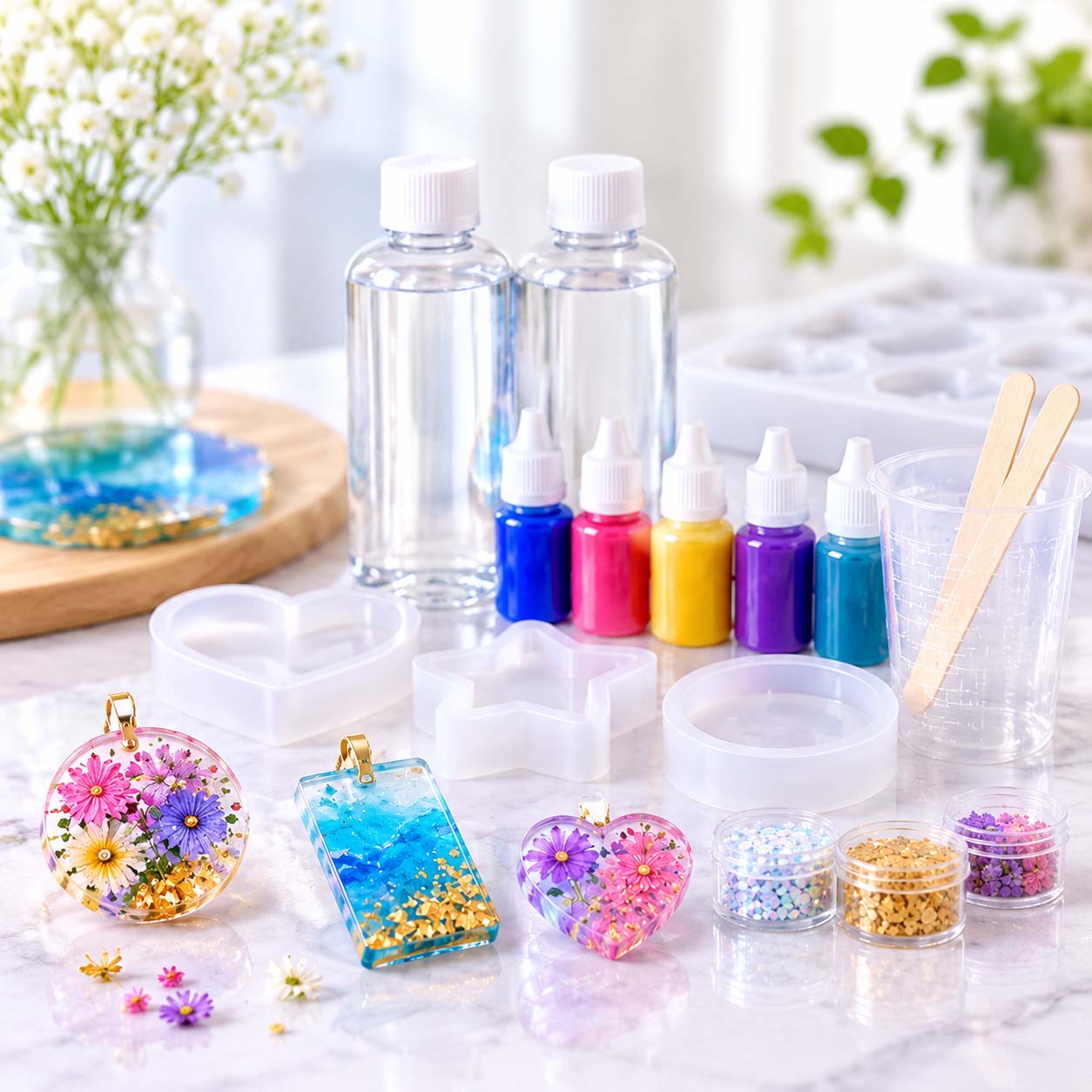 How to Choose a DIY Resin Kit Supplier for Wholesale and Private Label Business
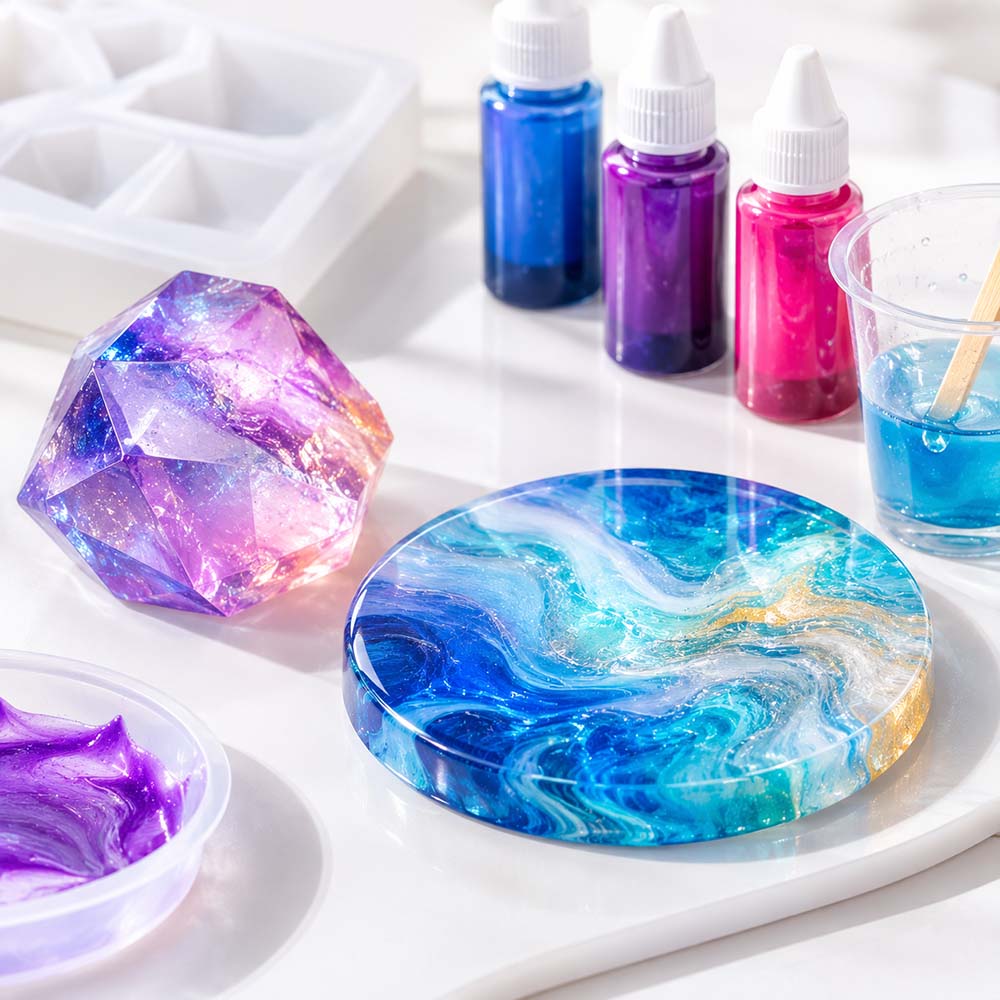 How to Choose the Right Colorant for Resin
 How to Use Liquid Dyes for Candles and Wax Melts