DIY resin kits have become a popular product category in the craft and hobby market. From jewelry making and decorative accessories to home décor and personalized gifts, resin kits allow consumers to explore creative projects with a convenient combination of materials and tools.
For retailers, wholesalers, and craft brands, choosing the right wholesale DIY resin kits involves more than comparing prices. Kit components, material compatibility, packaging, customization options, and supplier reliability all influence product quality and customer satisfaction.
So, what should a good DIY resin kit include?
1. Resin Materials That Match the Intended Application
The resin itself is the foundation of any DIY resin kit. Different projects require different resin systems, and selecting the appropriate material is essential.
Common options include:
-
Epoxy Resin: Suitable for jewelry, coasters, decorative objects, and other casting projects, depending on the resin formulation.
-
UV Resin: Designed for projects that require curing under UV light, such as small jewelry pieces and quick decorative applications.
-
Silicone Materials: Used in compatible mold-making and casting applications.
-
Polyurethane Materials: Suitable for specific casting and modeling applications.
For wholesale buyers, it is important to confirm the resin type, mixing ratio, curing requirements, working time, and intended applications before placing an order.
A well-designed kit should provide materials that work together rather than simply combining several unrelated products.
2. Essential Accessories and Tools
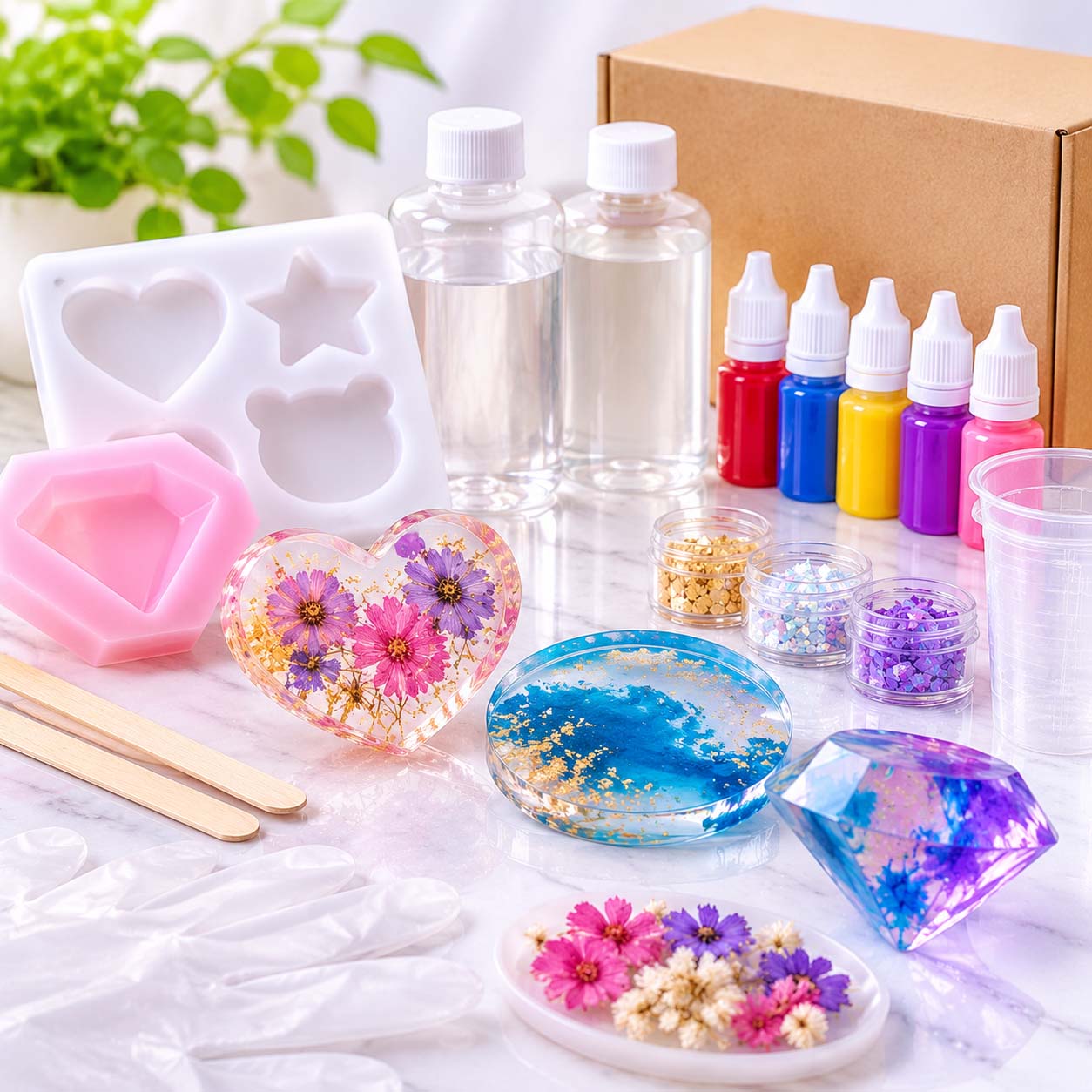
A complete DIY resin kit should include the accessories needed for its intended project.
Depending on the kit design, these may include:
-
Measuring cups and mixing sticks
-
-
-
-
Decorative materials such as glitter
-
Basic instructions and project guides
Not every kit needs every accessory. The right configuration depends on the target customer and the complexity of the project.
For example, a beginner jewelry-making kit may prioritize small molds, mixing tools, and basic colorants, while a more advanced craft kit may include additional decorative materials and specialized accessories.
The goal is to make the kit practical without adding unnecessary components that increase costs.
3. Colorants and Decorative Materials
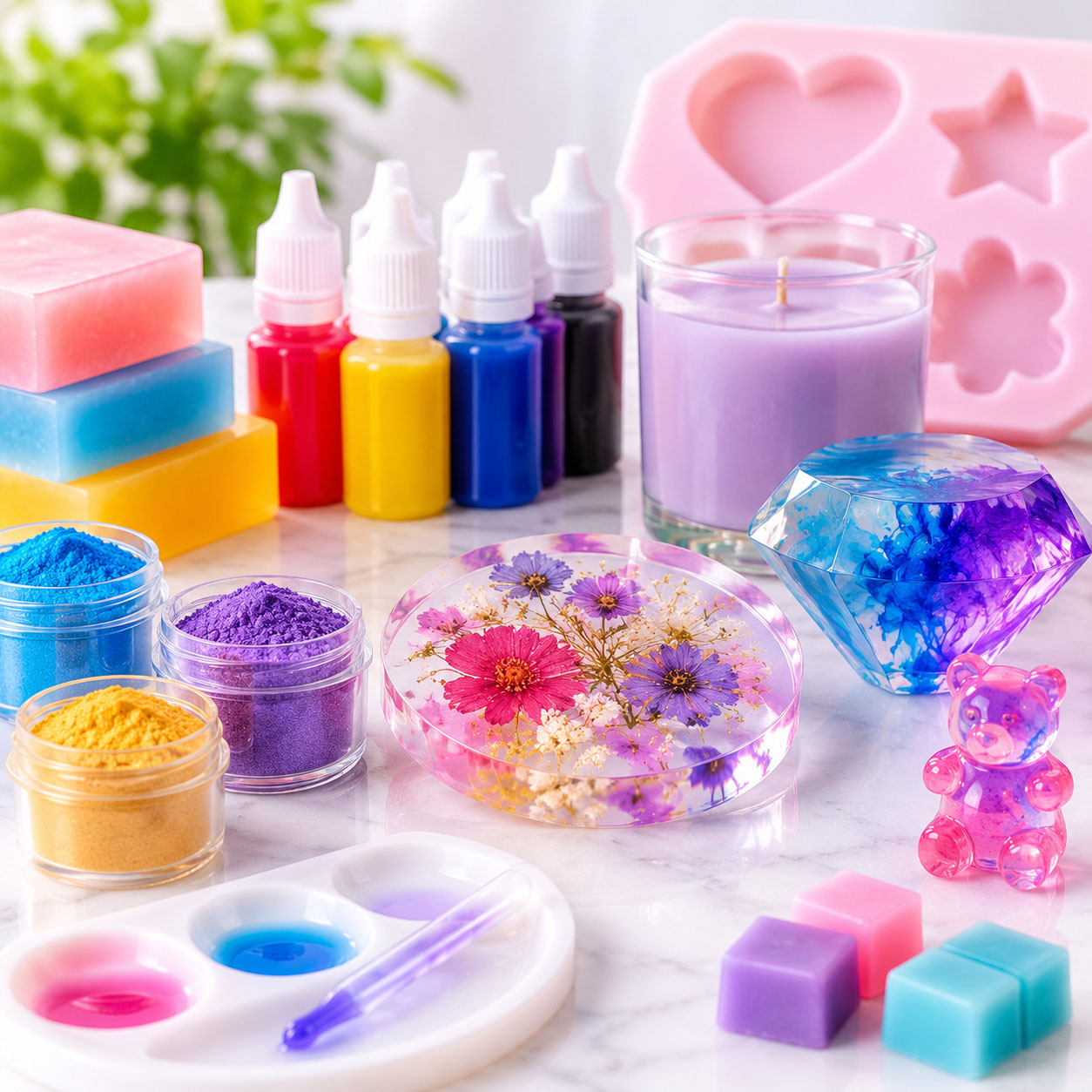
Colorants are an important part of the DIY resin experience because they allow users to create different visual effects.
Common decorative options include:
-
Liquid resin dyes for transparent coloring
-
Pigment pastes for more opaque color effects
-
Mica powders for pearlescent finishes
-
Glitter for decorative effects
Different colorants produce different results, and not every colorant is suitable for every resin system.
Wholesale buyers should confirm compatibility with the specific resin formulation and test the finished results before finalizing a kit combination.
For brands offering multiple kit variations, providing different color combinations can also help create more attractive product collections.
4. Packaging and Product Presentation
Packaging influences both product protection and retail presentation.
For wholesale DIY resin kits, packaging should consider:
Product Protection: Resin components and accessories should be properly sealed and protected during transportation.
Clear Identification: Labels should clearly identify product types, quantities, and relevant usage information.
Retail Presentation: Organized packaging makes the kit easier to display and more appealing to end customers.
Private Label Compatibility: Custom branding, packaging design, and product labeling can help retailers establish their own product identity.
For businesses selling through e-commerce platforms, packaging should also be designed with shipping and storage requirements in mind.
5. Safety Information and Usage Instructions
A DIY resin kit should provide clear instructions for its intended application.
Depending on the materials included, important information may cover:
-
Mixing ratios and preparation steps
-
Recommended working conditions
-
-
Appropriate protective equipment
-
Storage and handling requirements
For wholesale buyers, it is worth checking whether the supplier can provide product documentation, safety data sheets (SDS), and application instructions where applicable.
Clear instructions can help reduce incorrect usage and improve the overall customer experience.
6. Customization Options for Wholesale Buyers
Standard kits are useful for businesses looking for ready-made products. However, brands and distributors may need more flexibility to differentiate their offerings.
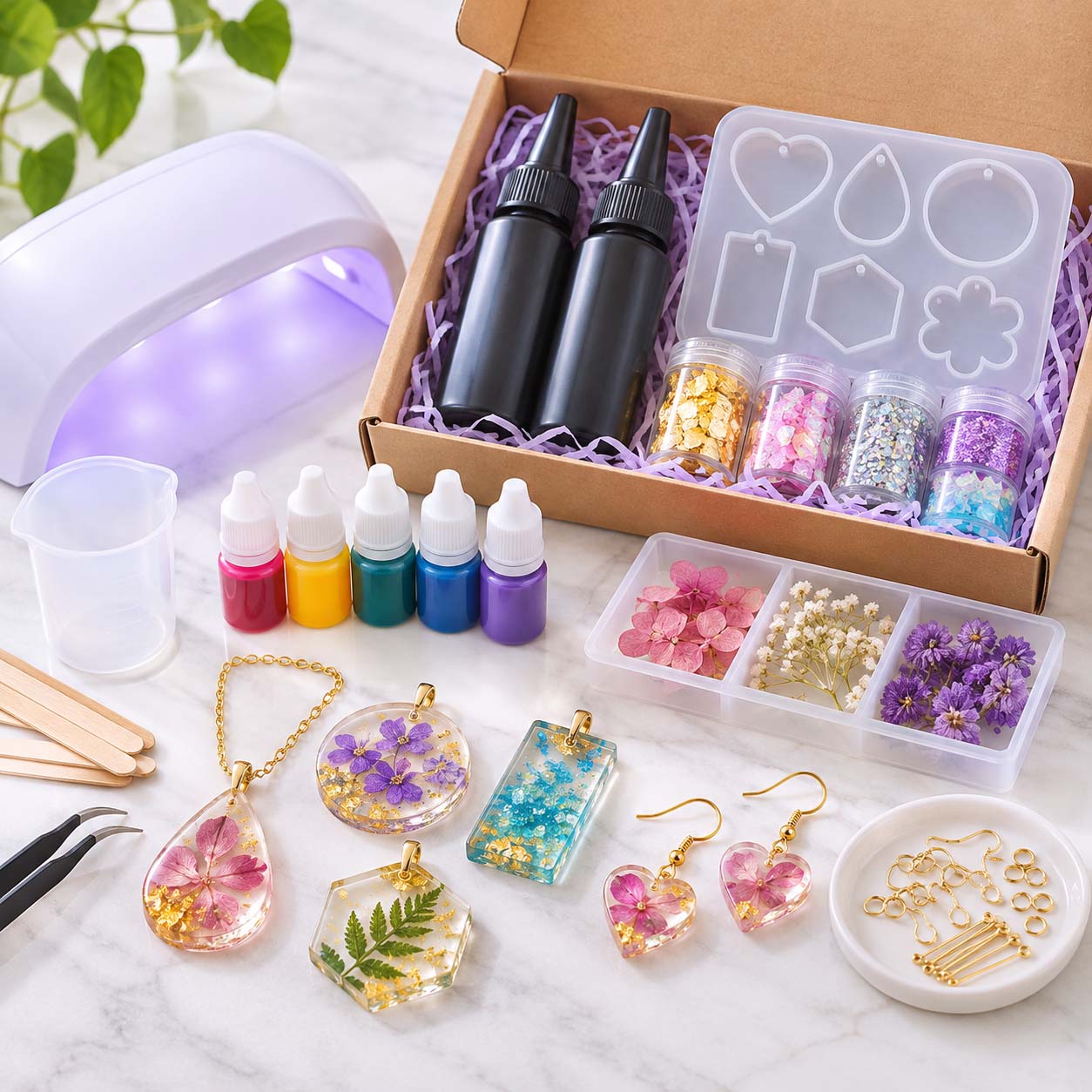
A capable DIY resin kit supplier may support customization in several areas:
Kit Configuration: Select different resin types, accessories, molds, and decorative materials.
Color Combinations: Develop customized color selections for different product themes.
Private Label Packaging: Add brand logos, customized packaging, and product labels.
OEM and ODM Services: Develop kit combinations and product presentations according to specific market requirements.
Before confirming a customized order, buyers should discuss minimum order quantities, sampling arrangements, production lead times, and packaging requirements.
7. How to Evaluate a Wholesale DIY Resin Kit Supplier
The quality of the finished kit depends heavily on the supplier’s ability to maintain consistent product specifications and supply.
When evaluating potential suppliers, consider the following factors:
| Evaluation Area |
What to Check |
| Product Quality |
Material specifications and batch consistency |
| Product Range |
Available resin types and accessories |
| Customization |
OEM, ODM, and private label capabilities |
| Documentation |
SDS and relevant product information |
| Sampling |
Availability of product samples |
| Supply Capacity |
Production capacity and bulk order support |
| Communication |
Response time and technical support |
It is also advisable to request samples before committing to a large wholesale order. Testing the actual kit components helps identify compatibility issues and evaluate the overall product experience.
Final Thoughts
Choosing wholesale DIY resin kits requires a balance between material quality, practical kit configuration, packaging, and supplier capabilities.
For retailers and craft brands, the best kit is not necessarily the one with the most accessories. It is the one that matches the intended application, offers a consistent user experience, and meets the needs of the target market.
Working with a supplier that supports product customization, sampling, and bulk supply can also make it easier to develop a distinctive DIY resin product line.
Looking for a DIY resin kit supplier for your business?
DIYRESINS provides DIY resin materials and customizable kit solutions for craft brands, retailers, and wholesale buyers. Contact our team to discuss product combinations, private label options, and bulk supply requirements.
 What Should a Wholesale DIY Resin Kit Include?
 DIY Craft Colorants: What Types Are Available and How to Choose the Right One?
 How to Customize a Private Label DIY Resin Kit: A Step-by-Step Guide for Brands